Someone answers 24 hours a day
Rodent Removal in Orlando, FL
Scratching in the attic at two in the morning, droppings on the garage shelf, or something moving inside a wall. We find how they got in, get them out, seal the openings, and clean up what they left.
Call 407-530-3375 Book a Free Inspection
Free inspection before any quote. Published price ranges below, so you know roughly where you stand before anyone visits.
Rodent Services We Handle Across Orlando
Every job starts with the same free inspection. What follows depends on what the inspection finds.
Roof Rat Removal
The rat that gets into Central Florida attics, and how it is removed for good.
Read more →Norway Rat Removal
Ground-level and burrowing rats around foundations, crawl spaces and garages.
Read more →Mouse Control
House mice fit through a hole the size of a dime. Finding and closing those holes.
Read more →Squirrel Removal
Daytime attic noise, chewed gable vents and the damage squirrels leave behind.
Read more →Rodent Inspection
A full roofline, attic and foundation inspection that tells you what is actually happening.
Read more →Rodent Exclusion
Sealing every entry point so the problem ends instead of repeating.
Read more →Attic Cleanup & Decontamination
Droppings, nesting material and contamination removed and the space sanitized.
Read more →Attic Insulation Replacement
Removing insulation rodents ruined and restoring the R-value you paid for.
Read more →Dead Rodent Removal
Locating and removing a dead rodent in a wall, attic or duct, and treating the odor.
Read more →Rodent Damage Repair
Chewed wiring, torn ductwork, damaged soffit and the structural gaps left behind.
Read more →Crawl Space Restoration
Clean-out, vapor barrier and screening for older Central Florida homes.
Read more →Commercial Rodent Control
Restaurants, retail, warehouses and multifamily properties with inspection exposure.
Read more →Rodent Clearance Letters
Documentation for a real estate closing, lender or insurer.
Read more →Rodent Prevention Plans
Ongoing monitoring for properties that back onto woods, water or open land.
Read more →Emergency Rodent Removal
A rodent in the living space, or noise you cannot sleep through. Same-day response.
Read more →What Types of Rodent Problems Do We Solve?
Central Florida has a specific rodent profile. The warm climate means there is no winter die-off, the tree canopy gives climbing species a route onto roofs, and the construction styles common here leave predictable openings. These are the problems we are called about most.
Roof rats in the attic
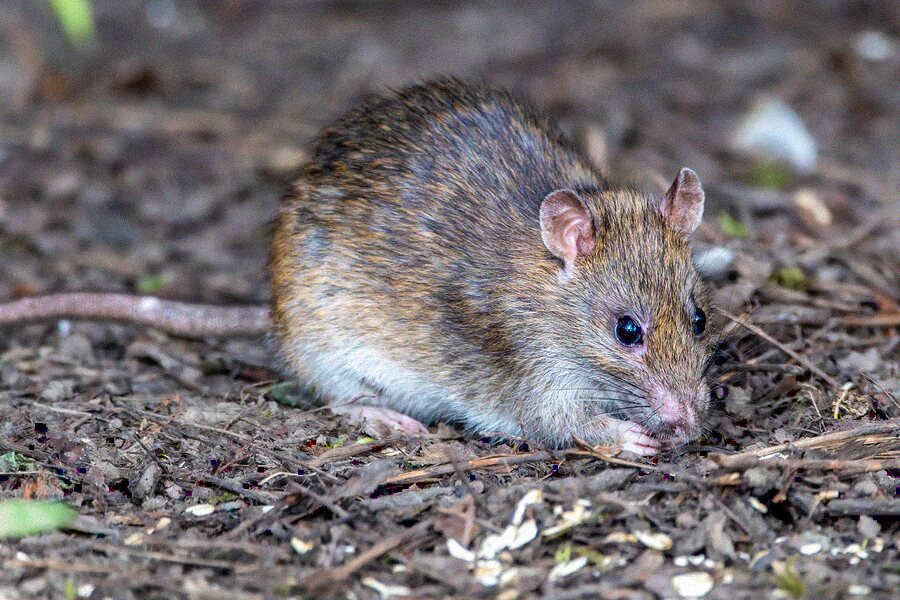
The roof rat is the worst rodent pest in Florida and the most abundant, according to UF/IFAS Extension. It climbs, it nests high, and it is the animal behind the overwhelming majority of attic calls in this metro. A female produces four to five litters a year with five to eight young per litter, which is why a problem ignored for one season is a substantially larger problem by the next.
Norway rats at ground level
Less common here than roof rats but harder to handle when present. Norway rats burrow, favor foundations, crawl spaces, garages and areas near water, and they are strong enough to enlarge an existing gap. Homes backing onto retention ponds, canals or drainage easements see them most.
House mice in walls and cabinets
A house mouse fits through an opening the size of a dime, which is why mouse problems so often defeat homeowners who have already sealed everything they could see. Mice stay closer to a food source than rats do, so activity concentrated around a kitchen or pantry usually points to mice rather than rats.
Squirrels in the attic and soffit
Squirrels are rodents and they cause the same damage, but they give themselves away by working during daylight while rats are active at night. Time of day is the single most useful clue a homeowner can give us over the phone. Squirrels chew gable vents and fascia boards, and their openings tend to be larger and more visible than a rat's.
Contamination left behind
The CDC records that rats and mice can spread over 35 diseases. Droppings and urine in insulation are the practical concern in an attic, both for air quality and because contaminated insulation loses much of its R-value. This is the part homeowners underestimate most often.
Dead animal odor in a wall or duct
Usually the aftermath of a poison-based treatment done by someone else. The animal dies inside the structure, and the odor can persist for weeks. Locating it often means opening drywall in the right place, which is a very different job from trapping.
Structural and wiring damage
Rodent incisors grow continuously, so gnawing is constant rather than occasional. In an attic that means wiring insulation, flexible ductwork, plumbing lines and stored belongings. Damaged ductwork in a Florida attic also means you are cooling the attic instead of the house.
Repeat infestations
The most common call we get is from someone whose previous company trapped successfully and left the openings alone. The rodents came back because the doorway was still there. Recurring problems are a sealing failure, and the fix is a proper exclusion pass rather than another round of traps.
What Types of Rodent Work Do We Arrange?
Nationally, about 14.8 million occupied housing units reported seeing rodents in a twelve month period, according to the Census Bureau's American Housing Survey. The work that resolves it falls into these categories.
Inspection and identification
A full walk of the roofline, attic, foundation and utility penetrations. The point is to identify the species, the entry points and the extent of contamination before anyone quotes a number. Standalone inspections run 0 to 175 dollars and are free when work is booked.
Trapping and removal
Snap traps and live traps placed on active runs, then monitored and reset. This phase typically runs one to three weeks. Poison is avoided for attic work because of the odor and secondary poisoning risks described above.
Exclusion and sealing
Steel mesh, hardware cloth, flashing and sealant applied to every opening found during inspection. Rodents cannot chew through properly installed steel, which is why this is the only part of the process that produces a permanent result. Typical range is 500 to 2,500 dollars depending on roof complexity.
Attic cleanup and decontamination
Removal of droppings and nesting material, then sanitizing treatment. Typical range is 600 to 2,500 dollars depending on attic size and contamination level.
Insulation removal and replacement
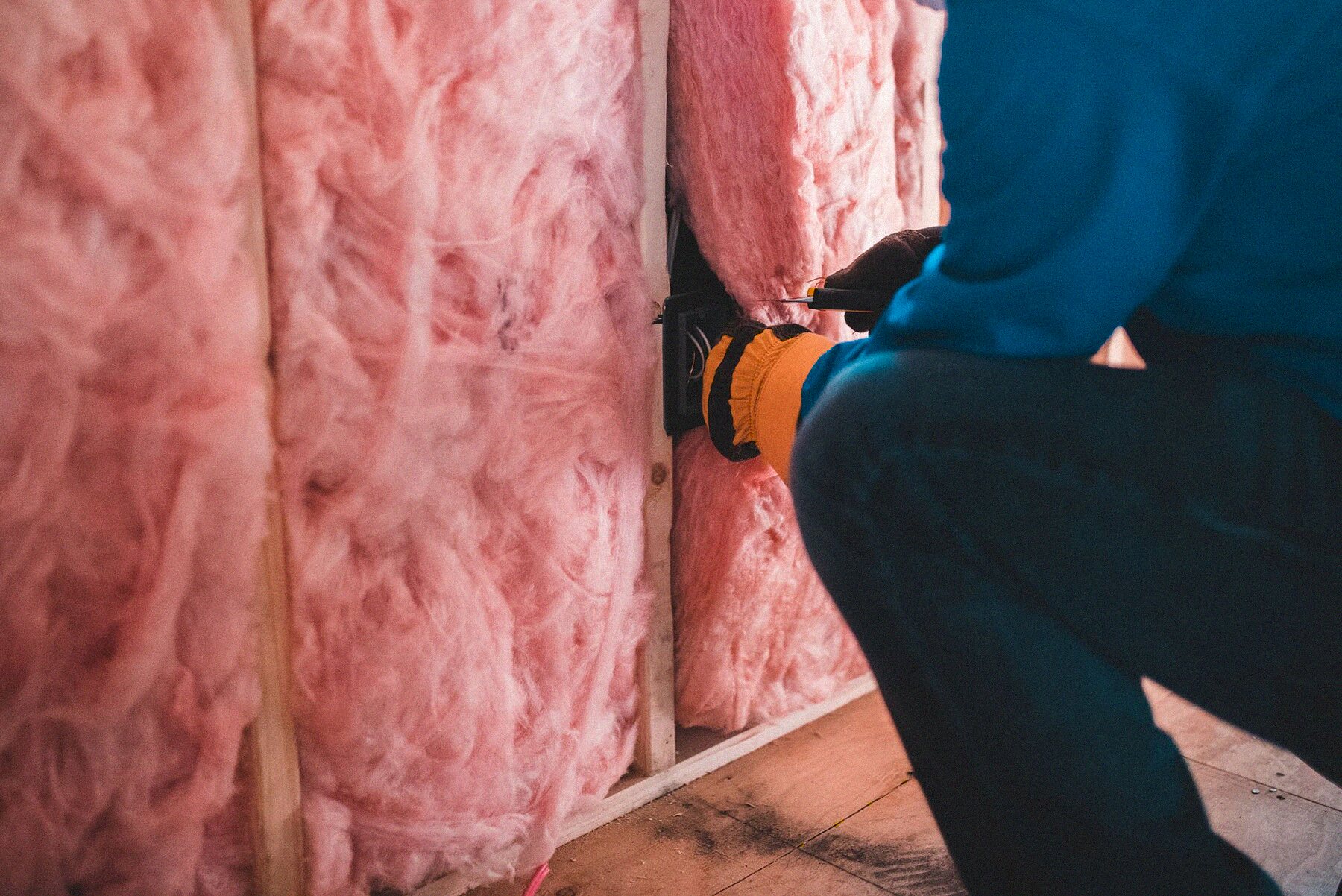
Contaminated insulation is vacuumed out and replaced to restore R-value. Costs run 2.50 to 5.50 dollars per square foot. On a badly affected attic this is frequently the largest single line item on the job.
Damage repair
Soffit, fascia, vent screens, ductwork and chewed wiring. Some of this is inside the scope of a rodent company and some belongs to an electrician or HVAC contractor, and we will tell you which is which.
Prevention and monitoring
Scheduled checks for properties that back onto woods, water, open land or active construction, where pressure from outside is constant regardless of how well the structure is sealed.
Documentation
Clearance letters for real estate closings, lenders and insurers. Sales in Central Florida do get held up by an inspector noting rodent evidence in an attic, and the paperwork resolving it is a specific deliverable.
How Rodents Get Into Central Florida Homes
Roof rats are climbers, and the Orlando metro gives them a great deal to climb. Mature oak canopy over older neighborhoods and palms against newer rooflines both put an animal on your roof without it ever touching the ground. Once it is up there, it needs an opening about the size of a quarter. Barrel tile roofs, soffit returns, and the gap where a roof plane meets a wall are the three that account for most of what we find.
- Overhanging limbs and palm fronds Branches touching the roof put an animal on it without it ever crossing the ground.
- Roof edge and fascia gaps Where the roof covering meets the fascia board, often opened up by a re-roof.
- Soffit returns and soffit vents The single most common way into a Central Florida attic.
- Roof and gable vents Original screening is usually plastic or light aluminum and rarely survives.
- Utility and plumbing penetrations Sealed with foam or stucco patch during construction, which rodents chew through.
- Garage door corners Worn corner seals are one of very few ground-level routes on a block home.
- Foundation and crawl space vents The main route for burrowing Norway rats rather than climbing roof rats.
Why Homeowners Call Us
The inspection happens before the number
Quotes in this trade for the same house routinely differ by thousands of dollars, and the reason is almost always that nobody explained what was included. Our technicians walk the roofline and the attic first, then price trapping, sealing, cleanup and insulation as separate line items you can see. Standalone inspection runs 0 to 175 dollars and costs nothing when you book the work.
Sealing is treated as the job
Trapping alone removes the animals in your attic today. Sealing is what stops the next ones. Every job includes an entry point survey, and the exclusion scope is written down before work starts. Six of the seven common entry points on a Central Florida home sit at or above the roofline, which is exactly where a general pest route rarely looks.
Experienced, state-registered technicians
The technicians who come to your property are registered with the State of Florida, carry their own insurance, and represent more than 30 years of combined pest control experience. Someone answers this phone line 24 hours a day, which matters when the problem is a rat in the living space at midnight rather than a scheduling question.
Get a Free Inspection and a Written Scope
You will know the species, the entry points, and what each part of the job costs before you commit to anything. Most inspections can be scheduled within 24 to 48 hours, and sooner when something is in your living space.
Call 407-530-3375 or send the form and we will call you back.
What Homeowners Say About Living With Rodents
These are short excerpts from public homeowner discussion forums, quoted anonymously. They are not reviews of our service, and they are here because they describe the part of this problem that most companies never mention.
"It is the night scratchies that is driving me crazy."
Homeowner, public home improvement forum
"Your home has been violated, basically."
Commenter describing the feeling to someone who had just found rats
"Most people I try to talk to about it act like I am being dramatic."
Homeowner, public pest control forum
Sleep loss and the feeling of not being comfortable in your own home are the reasons most people finally call. Both are legitimate reasons to get this handled quickly.
What Rodent Removal Costs in Orlando
Most companies in this trade will not publish a number, and homeowners are left comparing quotes with nothing to anchor against. Independent cost data puts the Orlando average for rat extermination at around 788 dollars, with most homeowners spending between 417 and 1,180 dollars. Below are the ranges we see across the metro. Every home is different, and the ranges are deliberately broad for that reason. Your inspection confirms where your property actually falls.
| Service | Typical range | What moves the number |
|---|---|---|
| Rodent inspection | Free with service | Standalone inspections run 0 to 175 dollars if you want a report without booking work |
| Rat or mouse trapping and removal | $250 to $1,200 | Home size, how long activity has been going on, and the number of active runs |
| Rodent exclusion (full-home sealing) | $500 to $2,500 | Roof complexity, number of openings, and whether soffit or fascia repair is needed |
| Attic cleanup and decontamination | $600 to $2,500 | Attic size, contamination level, and access height |
| Attic insulation replacement | $2.50 to $5.50 per sq ft | Square footage, insulation type, and whether removal and replacement are both needed |
| Dead rodent removal | $150 to $500 | How accessible the carcass is, and whether wall or duct opening is required |
| Full restoration after a long infestation | $3,000 to $10,000+ | Combines trapping, exclusion, cleanup and insulation on badly affected homes |
These are typical ranges for the greater Orlando metro, given so you can budget before anyone visits. The inspection produces the actual figure, and each part of the job is quoted as a separate line item.
Free Guide: 12 Questions to Ask Before Hiring a Rodent Company
Quotes for the same job in this trade routinely differ by thousands of dollars, and most homeowners have no way to tell which one is fair. This guide gives you the twelve questions that expose the difference, including the four that most companies hope you will not ask.
Sent to your inbox as a PDF. No cost and no obligation.
Serving the Greater Orlando Metro
Rodent pressure varies a lot across this metro. A 1920s bungalow in the Sanford historic district and a 2021 build in Horizon West have completely different weak points. Pick your city for the local detail.
- Rodent Removal Winter Park
- Rodent Removal Winter Garden
- Rodent Removal Winter Springs
- Rodent Removal Apopka
- Rodent Removal Kissimmee
- Rodent Removal St. Cloud
- Rodent Removal Oviedo
- Rodent Removal Altamonte Springs
- Rodent Removal Sanford
- Rodent Removal Ocoee
- Rodent Removal Maitland
- Rodent Removal Windermere
- Rodent Removal Lake Mary
- Rodent Removal Longwood
- Rodent Removal Casselberry
- Rodent Removal Clermont
Questions Orlando Homeowners Ask
How long does it take to get rid of rats in an attic?
For a typical Orlando home the trapping phase runs one to three weeks, and the sealing work is usually completed in a single visit once the inspection identifies the entry points. Larger or long-running infestations take longer. Anyone who promises a one visit fix before looking at your roofline is guessing.
Should the entry points be sealed before or during trapping?
Sealing is the part that actually ends the problem. The usual approach is to close every opening except the active runs, trap the animals still inside, then close the last openings once activity stops. Trapping without sealing removes the rodents that are there today and leaves the doorway open for the next ones.
Do I really need the attic cleaned, or is removing the rodents enough?
It depends on how long they were in there. A short infestation with light droppings often needs sanitizing only. Months of activity means contaminated insulation, nesting material and urine staining, and at that point cleanup and insulation replacement are about air quality and R-value as much as hygiene.
What does rodent removal cost in Orlando?
Independent cost data puts the Orlando average for rat extermination at around 788 dollars, with most homeowners spending between 417 and 1,180 dollars. Full exclusion, attic cleanup and insulation replacement are separate line items and push the total higher. Our published ranges are on this page and the inspection confirms where your home falls.
Is poison a good way to handle rats in the attic?
Poison creates two problems that are worse than the one it solves. The animal dies somewhere inside the structure and the odor can last for weeks, and poisoned rodents are eaten by owls, hawks and cats. Trapping combined with sealing is the standard professional approach for attic work.
Why do rats keep coming back after treatment?
Almost always because the openings were never closed. Roof rats follow the same routes repeatedly, and a soffit gap or an unsealed plumbing penetration works just as well for the next animal as it did for the last one. Recurring problems are usually a sealing failure rather than a trapping failure.
Are the technicians licensed and insured?
The technicians who come to your property are registered with the State of Florida and carry their own insurance. You can verify any registration directly with the Florida Department of Agriculture and Consumer Services before work begins.
Do you offer same-day service?
Someone answers this line 24 hours a day, and same-day inspection is usually available for urgent situations like a rodent in the living space or a dead animal odor. Call rather than using the form if the situation is happening right now.
Stop Listening to It and Get an Answer
A free inspection tells you what is up there, how it got in, and what it costs to end it. Someone answers this line 24 hours a day.