A mouse fits through a hole the size of a dime
Mouse Control in Orlando, FL
House mice stay close to a food source, which is why mouse activity clusters around kitchens, pantries and garages. They also fit through openings most homeowners would never think to seal.
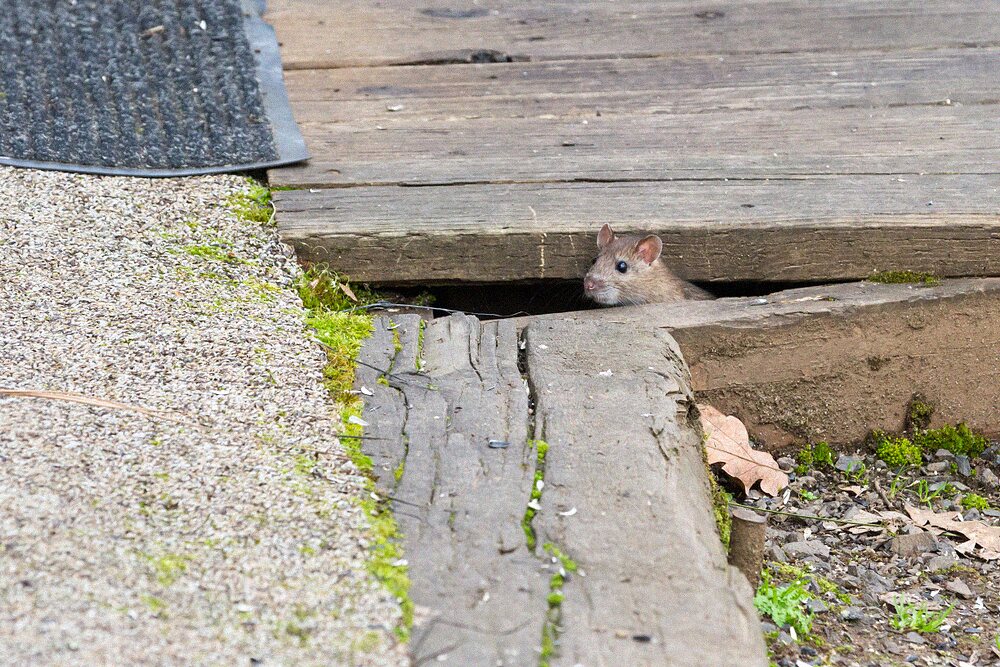
The single fact that decides most mouse jobs is the size of the opening required. A house mouse can pass through a gap about the size of a dime, roughly a quarter of an inch. That is smaller than the gap under many exterior doors, smaller than the space around an unsealed pipe penetration, and far smaller than the openings homeowners typically look for when they go around the house trying to find how something got in.
This is why mouse problems so often defeat people who have already made a genuine effort. Homeowners in public forums describe sealing everything they could find and continuing to catch mice, and the answer in nearly every case is that the remaining openings are smaller than what they were looking for. A recurring piece of advice in those threads is a reminder that a mouse only needs a hole the size of a dime, and it lands because most people are searching for something much bigger.
The other distinguishing habit is range. Mice stay much closer to a food source than rats do, typically within a small radius of wherever they are feeding. That makes the location of the activity genuinely diagnostic. Concentrated activity around a kitchen, a pantry or a garage where pet food is stored usually means mice, while activity spread across an attic more often means rats.
Estimate What Your Job Will Cost
Six questions, using the same ranges published further down this page. It gives you a band to budget against before anyone visits.
Signs you are dealing with mice rather than rats
Droppings are the fastest identification. Mouse droppings are about the size of a grain of rice, dark, and pointed at the ends. Rat droppings are two to three times that size. If you are finding rice sized droppings in a drawer, at the back of a pantry shelf, or along the wall behind an appliance, you are dealing with mice.
The sound is lighter and quicker than a rat, and it comes from inside walls, from under cabinets and from behind appliances more often than from overhead. Mice are also more willing to be active in the early evening while a house is still occupied, so people see them more often than they see rats.
Look for gnaw marks on food packaging, shredded paper, fabric or insulation used as nesting material in a drawer or a cabinet void, and a faint musty ammonia smell in an enclosed space like a cupboard under a sink. Mice urinate constantly as they travel, which is what produces that smell in a confined space.
Where mice get in, and why the openings get missed
The routes are almost always smaller and lower than people expect. Gaps under exterior doors and garage doors where the sweep has worn, the space around plumbing under a sink or behind a washing machine, gaps where the dryer vent passes through the wall, unsealed gaps around electrical conduit and cable entries, and weep holes and gaps in the brick or block line at grade.
Inside, mice travel through wall voids and above ceilings, so the place you see them is frequently not the place they entered. That is why a proper job traces the route rather than sealing at the point of sighting. Sealing a hole in a kitchen cabinet when the actual entry is at a dryer vent twenty feet away simply moves where you see them.
Expanding foam on its own is the most common homeowner fix and the least durable. Mice chew through foam readily. Foam is useful as a sealant and air barrier once the opening has been packed with something that cannot be chewed, which in practice means steel wool, copper mesh or hardware cloth backing the foam.
Food source control is half the work
Because mice live so close to their food, removing the food source does more to a mouse population than it does to a rat population. Pet food stored in a garage in its original bag is the single most common contributor we see, and moving it into a sealed metal or hard plastic container frequently changes the picture on its own.
The same applies to bird seed, grass seed, bulk dry goods in a pantry, and food waste in an unsecured bin. Homeowners in public discussions consistently report that trapping went better once the competing food was removed, and the mechanism is straightforward. A mouse that has an easier meal available has little reason to investigate a trap.
The trapping phase works substantially faster when bait is the most attractive food in the room, which is why food storage comes up at the inspection.
How a Mouse Job Is Done
The sequence mirrors rat work, with more emphasis on tracing routes through wall voids and on the food source.
- 1
Inspection and route tracing
The technician identifies where activity is concentrated, then traces the likely route back through wall voids and utility runs to the actual entry point, rather than sealing where mice were seen.
- 2
Food source review
Pet food, bird seed, pantry storage and waste handling get reviewed, because a competing food source slows the trapping phase considerably.
- 3
Trapping
Multiple traps placed close together along walls on active runs, since mice hug walls when they travel. Monitored and reset until activity stops.
- 4
Sealing the small openings
Steel wool, copper mesh and hardware cloth packed into openings and backed with sealant. Door sweeps, dryer vent surrounds and utility penetrations are the usual list.
- 5
Clean-up and follow-up
Contaminated nesting material removed and affected areas sanitized, with a follow-up check to confirm the trapping has genuinely finished.
What This Costs in Orlando
Mouse work is usually less expensive than rat work because the trapping phase is shorter and the sealing is more localized. It goes up when the entry points are numerous and small, which is common on older homes with worn door seals and multiple utility penetrations.
| Service | Typical range | What moves the number |
|---|---|---|
| Inspection | Free with service | Standalone reports run 0 to 175 dollars |
| Mouse trapping and removal | $250 to $900 | Number of active areas, food source competition, home size |
| Entry point sealing | $350 to $1,600 | Number of openings, door and vent work, whether the block line needs attention |
| Sanitizing affected areas | $200 to $800 | Extent of contamination in cabinets, drawers and wall voids |
| Attic cleanup if mice reached the attic | $600 to $2,500 | Attic size and contamination level |
These are typical ranges for the greater Orlando metro. Every property is different, and the free inspection produces the actual figure with each part of the job priced as its own line item.
Why Homeowners Choose Us for This Work
We look for openings the size of a dime
Most homeowners who call us have already sealed everything they could see. The openings that remain are the ones a quarter inch gap goes unnoticed in, which is why this job is an inspection problem before it is a trapping problem.
We trace the route instead of sealing the sighting
Mice travel through wall voids, so where you see one is often nowhere near where it got in. Sealing at the sighting moves the problem. Tracing the run back to the actual penetration ends it.
Experienced, state-registered technicians
The technicians who come to your property are registered with the State of Florida, carry their own insurance, and represent more than 30 years of combined pest control experience. Someone answers this line 24 hours a day.
What Reddit Says About Mouse Control in Orlando
Public homeowner forums produce more practical detail on mice than on any other rodent, largely because so many people attempt it themselves first. The most repeated technical point concerns entry size, with commenters reminding each other that a mouse needs only a hole the size of a dime and that the search should be for far smaller openings than instinct suggests. The second most repeated point is about foam. Experienced commenters consistently warn that mice chew through expanding foam, and the recommended approach is packing an opening with steel wool or mesh first and using foam only as a secondary seal.
Trapping technique comes up constantly, and the recurring complaint is mice taking bait without setting off the trap. The fixes people share are consistent: use very little bait, work it into the trigger rather than piling it on, and set multiple traps close together against walls where mice actually travel rather than spacing them around a room. Several commenters describe catching nothing for days with one or two traps and then catching quickly after setting a dozen along a single wall.
The strategic advice mirrors what we tell homeowners at the inspection. One commenter summarized the whole problem as needing to seal from roof to foundation because otherwise you are simply harvesting rodents in traps, and that is the difference between a mouse problem that ends and one that runs for months. If the quote you are holding covers trapping and says nothing about sealing, it is describing a service that manages the symptom.
What a Typical Job Looks Like
A common call from a homeowner with activity in the kitchen
The situation. Rice sized droppings appearing in a drawer beside the range and at the back of a pantry shelf, plus a chewed corner on a cereal box. The homeowner has set two traps for a week with nothing caught, and has already used expanding foam on a gap under the sink.
What gets done. The inspection traces the run from the kitchen back through the cabinet void to an unsealed gap where the dryer vent passes through the exterior wall in the adjoining laundry, plus a worn sweep on the door from the garage. The dryer vent surround is packed with copper mesh and sealed, the door sweep is replaced, the garage-stored pet food goes into a sealed container, and eight traps go in along the run instead of two.
How it turns out. The trapping finishes inside a week once the traps are positioned on the actual route and the competing food is gone. The two openings that mattered are closed with material a mouse cannot chew, which is the part that stops it repeating next autumn.
Common Questions
How small an opening can a mouse get through?
About a quarter of an inch, often described as the size of a dime. That is smaller than the gap under many exterior doors and smaller than most homeowners are looking for when they try to find the entry point themselves.
Why am I not catching anything in my traps?
Usually one of three things. Too few traps, traps placed away from the walls mice actually travel along, or too much bait so the animal can lick it off without triggering the mechanism. Multiple traps set close together against a wall on an active run, with a very small amount of bait worked into the trigger, changes results quickly.
Will expanding foam keep mice out?
Not on its own. Mice chew through foam without much difficulty. Foam works as a secondary seal once the opening has been packed with steel wool, copper mesh or hardware cloth, which are materials a mouse cannot chew through.
Do mice go in attics like rats do?
They can, and in Central Florida they sometimes do. Activity concentrated near food is the more typical mouse pattern, while activity spread across an attic more often means roof rats. If you have both patterns, it is worth having the species confirmed before anyone commits to an approach.
Is one mouse a sign of an infestation?
Not always, but it is worth taking seriously rather than assuming it wandered in alone. Mice reproduce quickly and stay close to food, so a single sighting near a food source is usually worth an inspection even if it turns out to be nothing.
Do I need to throw out food in the pantry?
Anything in packaging that has been gnawed or that shows droppings should go. Sealed containers, cans and jars are fine. The sanitizing work covers the surfaces and voids, and moving dry goods into sealed containers afterwards is the change that keeps it from repeating.
Related Services
Squirrel Removal
Daytime attic noise, chewed gable vents and the damage squirrels leave behind.
Read more →Rodent Inspection
A full roofline, attic and foundation inspection that tells you what is actually happening.
Read more →Rodent Exclusion
Sealing every entry point so the problem ends instead of repeating.
Read more →More about how we work on the about page, or get in touch to book a free inspection.
Find the Opening You Have Not Found Yet
Most people who call us have already sealed everything they could see. A free inspection traces the actual route and finds the quarter inch gaps that are still open.